Wood
Privacy, picket, and cedar or treated layouts. Wood fence installation.
Installation
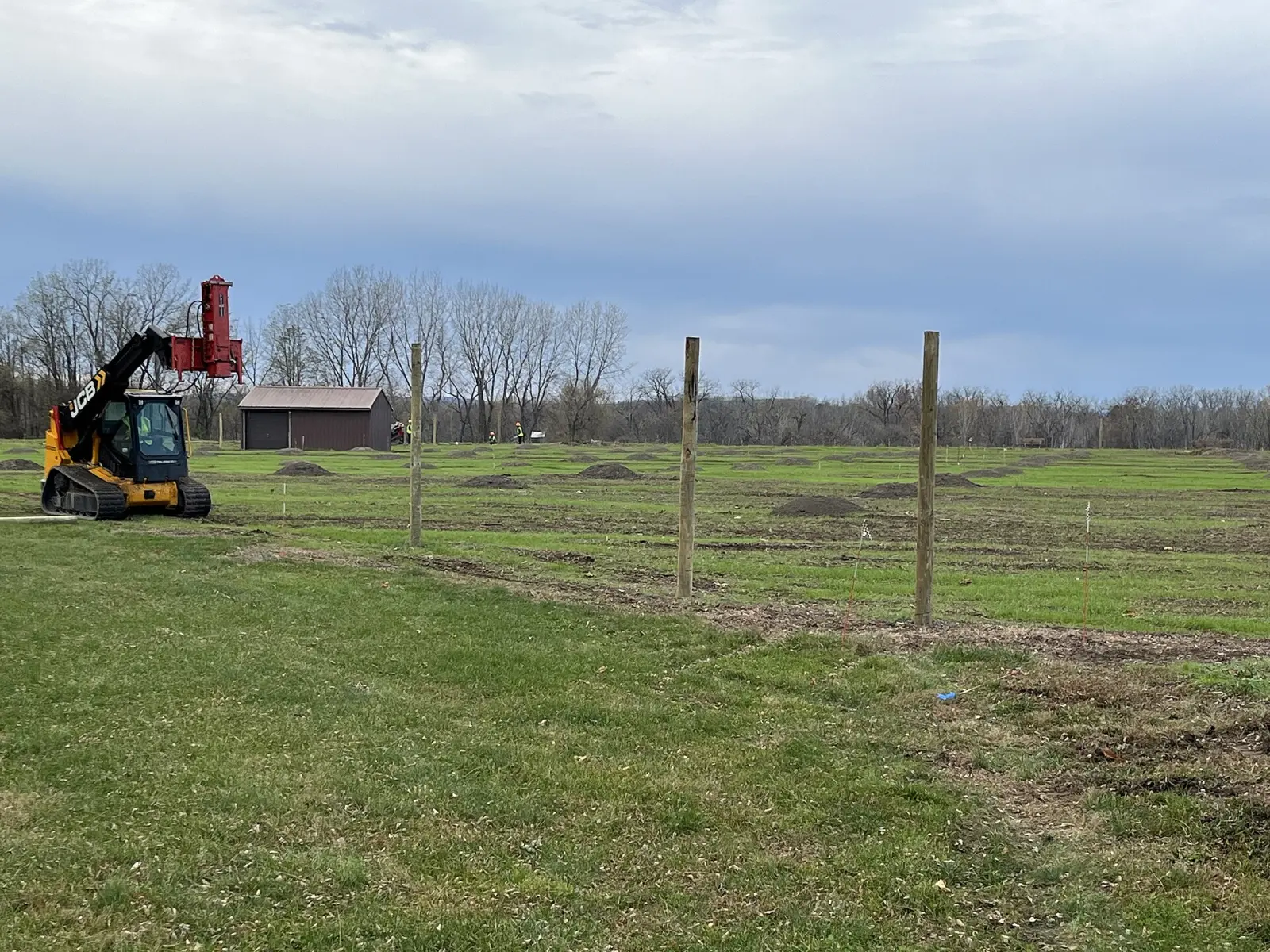
A new fence is layout, posts, and gates before it is a style. The material comes after the line is something you can stand behind.
Fence installation is the work of putting a new line where a yard, a lot, or a commercial edge needs one. People also search for installers, installation cost, and professional installation because the hard part is not buying panels. It is setting posts that stay, meeting a slope, and leaving gates that close.
We install wood, vinyl, chain link, aluminum, and ornamental metal. Picket, privacy, pool, and custom layouts are versions of that work, not separate companies. Pet containment is a reason for a fence, and it is still a fence: height, gaps, and a gate a dog cannot nose open. An underground pet system or an electric agricultural wire is a different product and is discussed on the specialty fencing page, not sold as a wood privacy job.
Cost follows footage, gate count, demolition, soil, and access. A phone photo can start the conversation. It cannot set post depth. We do not publish a single installation price, because a flat lot with one walk gate and a sloped lot with a driveway gate are not the same bid.
Do-it-yourself research is reasonable for understanding styles. Digging, property corners, and pool-code gates are where most homemade lines fail. This page explains what a crew is responsible for. It is not a construction manual.
Scope
Privacy, picket, and cedar or treated layouts. Wood fence installation.
Privacy and picket profiles with expansion in mind. Vinyl fence.
Framework, mesh, and coated options. Chain link installation.
Open ornamental lines and many pool barriers. Aluminum fence.
Solid runs where sightlines are the point. Privacy fence.
Every new line should name its openings. Gate installation.
Compare
These are the items a proposal should show, not a rate card.
| Factor | What it changes | Ask on the visit |
|---|---|---|
| Linear feet | Material and labor | Is the number to the outside of posts or a rough pace-off? |
| Gates | Posts, hardware, width | Walk, drive, or both, and which way they swing? |
| Grade | Stepped or racked panels | Where does water want to go at the bottom? |
| Old fence | Time and haul-off | Is removal in the price or assumed? |
| Soil and access | Equipment and concrete | Can a machine reach the back, or is it a carry? |
| Rules | Height and pool hardware | HOA, city, or pool barrier — which one applies? |

Process
Privacy, pets, pool, street edge, or a commercial yard. The purpose picks the height band before the color does.
Corners you can explain. If pins are missing, the proposal says the line is pending survey or agreement. We do not guess a boundary and call it done.
A dig ticket before holes. Private lines the utility will not mark, such as irrigation, are pointed out by the owner if known.
Gate posts are specified with the opening, not added after the panels look nice. Slope at the opening is checked here.
Boards, panels, mesh, or pickets, with the bottom kept consistent enough that pets and water are not surprises.
Latches, drops, and a walk from both ends. You should know how the material is washed or stained, if it needs either.
Field notes
A fence that looks straight and sits on the neighbor’s side is still in the wrong place. Layout is a measuring job.
A light line post may be wrong at a corner or a gate. Those locations take more load.
Racking and stepping are decisions, not something to improvise when the boards will not fit.
We can terminate at a sound deck. We do not rebuild the deck. If the rim is soft, say so before the fence is scheduled.
A decorative short fence is not a pool barrier. If the pool is in the scope, read pool fence before the order.
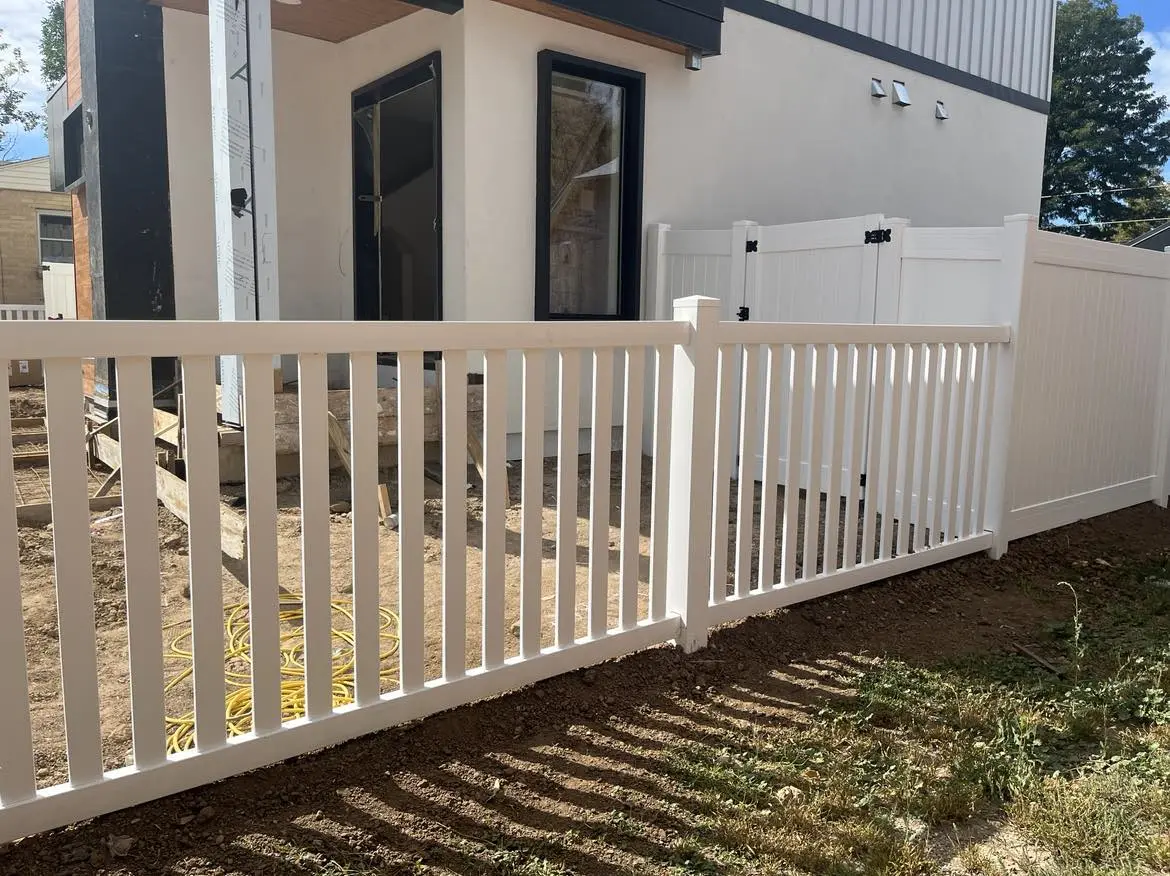
Picket installation is usually a front or side look: spacing, a cap, and a height that fits the porch. Privacy installation is a solid face, more wind, and a stronger opinion about which side faces the neighbor. Custom means the run is not a single catalog height from end to end — a step-down, a transition to chain link behind a garage, or a gate that has to clear a slope. Name that on the request.
A dog fence, in the way most homeowners mean it, is a physical fence with a gap at the bottom a dog cannot squeeze and a latch a dog cannot bump. Height depends on the animal. We will not pretend a 4-foot picket holds every breed. Electronic containment is not this installation. If that is what you searched, say so, and we will tell you it is outside a wood or vinyl proposal.
A commercial line uses the same digging discipline and a different specification: mesh or ornamental steel, taller frames, and gates that vehicles use. Details live on the commercial fencing page so a homeowner quote is not padded with industrial language it does not need.
Wood wants a finish plan. Vinyl wants room to move. Chain link wants tension that is still there next season. Those are maintenance topics, and they belong in the conversation on day one so the installation is not treated as a product that never needs a look.
Questions
It depends on material, length, gates, removal, and access. We quote the property. We do not print a universal per-foot price.
Yes. The proposal should say whether panels step or rack, and how the bottom gap is handled.
When the jurisdiction requires one for the height or the pool, it is part of the plan. Rules differ by city. We do not guess that every town is the same.
We will meet a sound deck. Deck construction itself is not our work.
A sketch helps the call. Orders wait until posts, gates, and the line are confirmed on site.
A straightforward residential run is often measured in days, not weeks, once materials are on hand. Gates, rock, or limited access change that. The schedule is given with the proposal, not as a blanket promise.
Agricultural electric wire is not a residential privacy install. If the property is a pasture, it belongs in a specialty conversation with the safety rules that go with it.
A ZIP code, access to the yard, and any survey pins or HOA rules you already have. Sprinkler heads near the line are worth flagging.
Related
We confirm whether the address is in range before a visit is booked. The form prepares an email. It does not show a false delivery receipt.
Request an Estimate